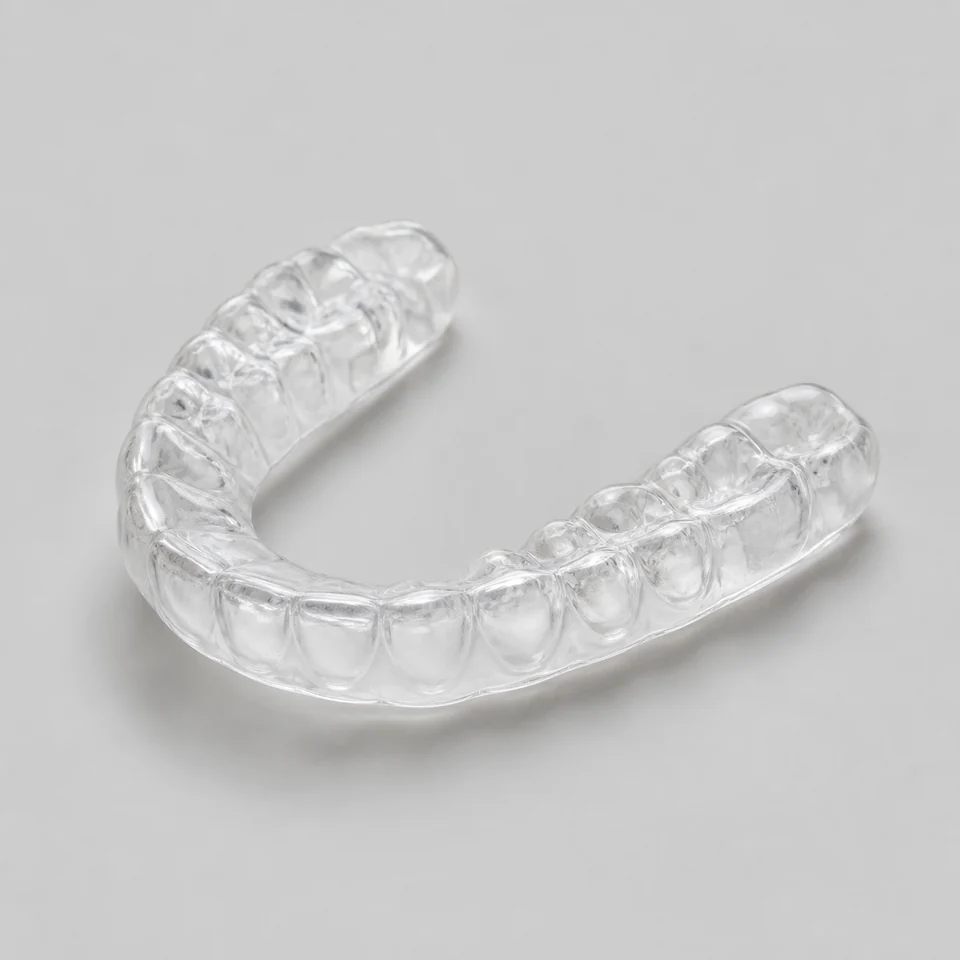
Suitable Applications
Guard Type
Hard, soft or dual-laminate night guard options should be discussed according to clinical preference and records.
Occlusion Review
Bite records, opposing arch and occlusal adjustment requirements help guide appliance design.
Fit and Comfort
Margins, retention, thickness, edge finishing and comfort expectations should be reviewed before completion.
Digital Records
Open digital files can be reviewed for appliance design when scanner compatibility is confirmed.
Common Materials and Options
- Hard clear acrylic occlusal splints
- Soft guard options according to the prescription
- Dual-laminate guard options combining a softer inner layer and firmer outer layer
- Thickness and coverage options confirmed from the intended use and records
Case Records to Submit
- Upper or lower arch and appliance type
- Thickness, material preference and coverage notes
- Bite record and opposing arch information
- Digital files or model/impression details
- Special finishing or packaging requirements
Quality Checkpoints
- Scan or model accuracy and full planned coverage
- Retention, seating and border extension
- Occlusal contacts and opposing-arch relationship according to the prescription
- Thickness, edge finishing, polish, cleanliness and packaging
Common Questions
Hard, soft or dual-laminate?
The treating clinician should specify the guard type based on the intended use, occlusion, retention and patient-specific requirements.
Do you need the opposing arch?
Yes, when occlusal contacts or adjustment are required. A bite record may also be needed depending on the prescribed design.
Can night guards be made from digital scans?
Open digital files may be reviewed when the scan is complete and the file format and workflow are compatible.
Recommended Next Step
Send both arches, the bite record, guard type, thickness and coverage instructions for a night-guard workflow review.